
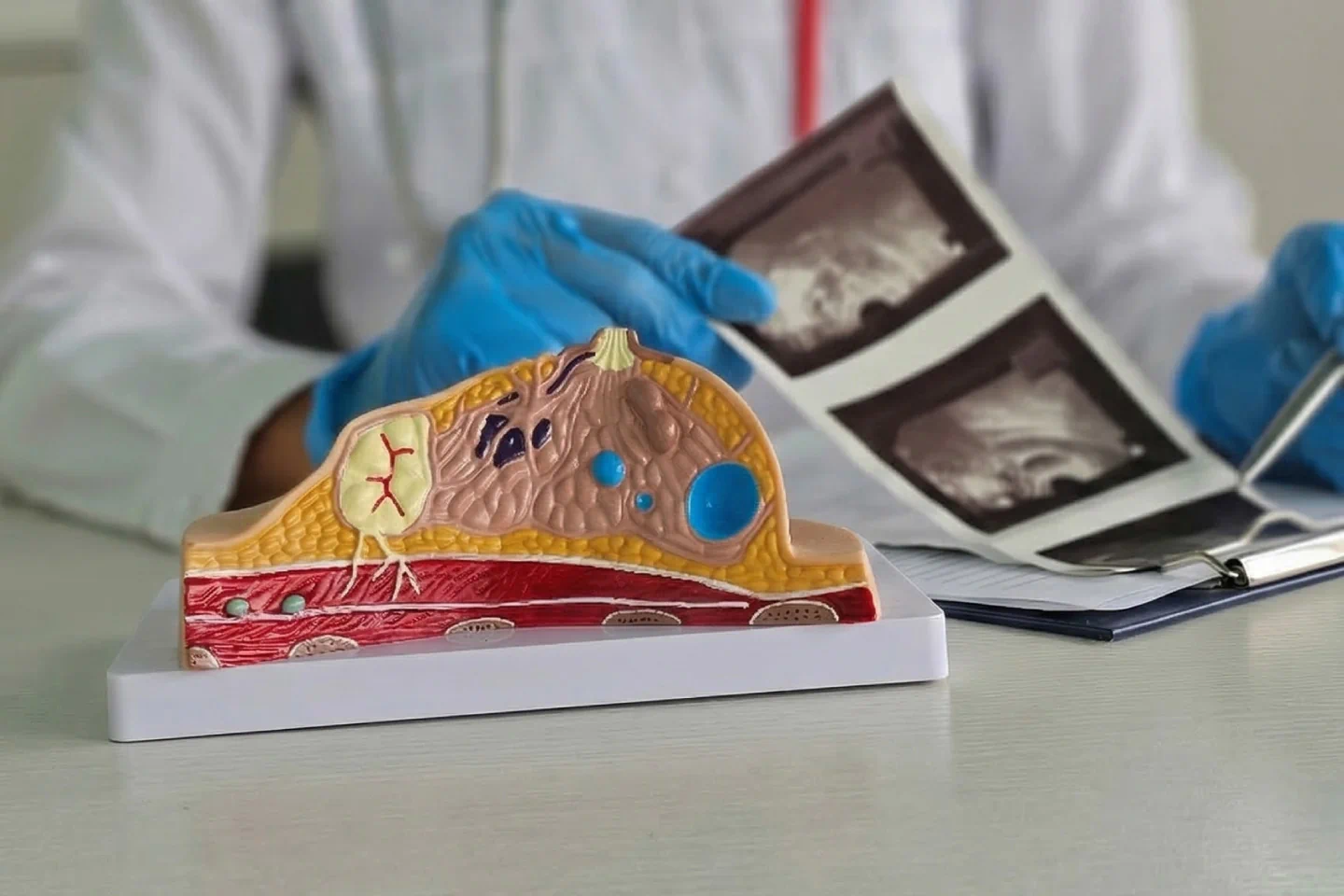
Receiving a mammogram report that mentions breast calcifications can be concerning, especially if you are unfamiliar with the term. Fortunately, breast calcifications are very common and, in most cases, are not a sign of cancer. They are tiny calcium deposits that develop within the breast tissue and are often detected during routine mammograms.
Although most calcifications are harmless, certain patterns may require additional imaging or, in some cases, a biopsy to determine their cause. Understanding what breast calcifications are and how they are evaluated can help ease anxiety and prepare you for discussions with your healthcare provider.
What Are Breast Calcifications?
Breast calcifications are small deposits of calcium that appear as white spots or specks on a mammogram. They are usually too small to be felt during a breast examination and typically do not cause pain or other symptoms.
Calcifications themselves are not a disease. Instead, they are imaging findings that may occur as part of normal aging or due to various changes within the breast tissue.
What Causes Breast Calcifications?
There are many possible reasons why calcifications develop.
Common causes include:
- Natural aging of breast tissue
- Previous breast injury or trauma
- Inflammation
- Past breast infections
- Benign breast cysts
- Fibroadenomas
- Previous breast surgery
- Radiation therapy
- Calcium deposits associated with noncancerous tissue changes
Importantly, eating calcium-rich foods or taking calcium supplements does not cause breast calcifications.
Types Of Breast Calcifications
Radiologists generally classify breast calcifications into two main categories.
Macrocalcifications
Macrocalcifications are larger calcium deposits that commonly occur as women age.
They are usually:
- Benign
- Randomly scattered
- Not associated with breast cancer
- Common after age 50
Macrocalcifications generally do not require additional testing or treatment.
Microcalcifications
Microcalcifications are much smaller calcium deposits.
Most microcalcifications are also benign. However, when they appear in certain patterns, such as tightly grouped or irregular clusters, they may require further evaluation because they can occasionally be associated with precancerous changes or early breast cancer.
The appearance, distribution, and pattern of the calcifications help guide the next steps.
How Are Breast Calcifications Found?
Most breast calcifications are detected during a screening or diagnostic mammogram.
Because they are usually too small to be felt, women often have no symptoms and are unaware they are present until imaging is performed.
When Are Additional Tests Needed?
Not every finding of calcifications requires further investigation.
If the calcifications appear benign, your radiologist may recommend continuing routine breast cancer screening.
If the calcifications have features that are not clearly benign, additional evaluation may include:
- Magnification mammography views
- Short-term follow-up imaging
- Image-guided breast biopsy when appropriate
These tests help determine whether the calcifications are benign or require further treatment.
Does Having Breast Calcifications Mean You Have Breast Cancer?
No.
The vast majority of breast calcifications are noncancerous.
However, certain patterns of microcalcifications may be associated with conditions such as ductal carcinoma in situ (DCIS) or, less commonly, invasive breast cancer. This is why careful interpretation by an experienced radiologist is important.
If additional testing is recommended, it does not necessarily mean that cancer is present. It simply helps ensure an accurate diagnosis.
What Happens If A Biopsy Is Recommended?
If your doctor recommends a biopsy, it is because the mammogram findings need further evaluation.
A minimally invasive image-guided biopsy is commonly performed to obtain a small sample of tissue. The tissue is then examined under a microscope to determine the exact cause of the calcifications.
Many biopsies performed for breast calcifications confirm benign conditions.
Can Breast Calcifications Be Prevented?
Breast calcifications are usually a natural part of changes that occur within breast tissue and cannot be prevented.
The most important step is to:
- Attend recommended mammogram screenings
- Report any new breast changes to your doctor
- Follow up on imaging recommendations
- Maintain regular breast health checkups
Routine screening helps detect changes early, even before symptoms develop.
When Should You Consult A Specialist?
You should consult a breast specialist if:
- Your mammogram reports suspicious calcifications
- Additional imaging has been recommended
- A breast biopsy has been advised
- You notice a new breast lump or other breast changes
- You have a strong family history of breast or ovarian cancer
Timely evaluation helps determine whether additional testing is needed and provides reassurance when findings are benign.
Conclusion
Breast calcifications are a common mammographic finding and are usually harmless. While most require no treatment, certain patterns may warrant additional imaging or a biopsy to rule out early breast cancer or precancerous changes. Understanding your mammogram results and following your doctor's recommendations are important steps in maintaining breast health. Early evaluation helps ensure that any concerns are addressed promptly and appropriately.
For expert breast evaluation and personalized treatment, consult Dr. Kanmani Govindrao Telkar, Breast Oncoplastic and Reconstructive Surgeon.
FAQs
Q: Are breast calcifications always a sign of breast cancer?
A: No. Most breast calcifications are benign and are commonly associated with normal aging or noncancerous breast conditions.
Q: Can breast calcifications be felt during a breast exam?
A: Usually not. Most calcifications are too small to be felt and are detected only on a mammogram.
Q: Will I need a biopsy if calcifications are found?
A: Not always. A biopsy is recommended only if the calcifications have features that require further evaluation.
Q: Do calcium supplements cause breast calcifications?
A: No. There is no evidence that calcium supplements or calcium-rich foods cause breast calcifications.
Q: Should I continue routine mammograms if I have benign calcifications?
A: Yes. Regular mammograms remain an important part of breast cancer screening and help monitor your ongoing breast health.
If your mammogram has identified breast calcifications or you have questions about your breast health, schedule a consultation with Dr. Kanmani Govindrao Telkar, Breast Oncoplastic and Reconstructive Surgeon. She provides comprehensive breast evaluation, advanced surgical care, and personalized treatment tailored to each patient's needs.